
Alan Turing Professor
of Complex Physical Systems
Our research group focuses on
understanding nonequilibrium phenomena in the natural world, with particular
emphasis on biological physics. We strive for a holistic approach in
which theory and experiment seamlessly coexist, in the best tradition
of DAMTP. The group include theoretical and experimental
physicists, chemists, applied mathematicians and biologists, and we collaborate broadly
with scientists from other departments in Cambridge and beyond.
We are grateful to Wellcome and the Leverhulme Trust for their generous funding of our current research.


Our laboratory has achieved Bronze status in the Laboratory Efficiency Assessment Framework (LEAF).
Tigra Fader Sample #1 - Simple Slide Show
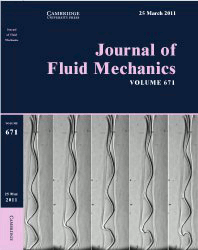
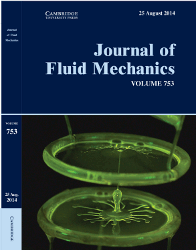
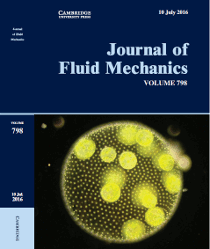
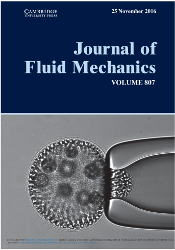
Here is a collection of images from our recent research.


Our current research involves physical aspects of
multicellularity, with a focus on structure and developmental processes of two classes of model
organisms: green algae and choanoflagellates. We use the green algae to understand
physical principles of extracellular matrix (ECM) generation, addressing a fundamental question
in biology: How do cells make structures external to themselves in robust and accurate manner?
This research involves the use of a number of different species in the Volvocine lineage, including
genetically engineered mutants of Volvox in which YFP is fused to a particular protein in the ECM
(done collaboratively with the group of Armin Hallmann in Bielefeld, Germany). This work reveals how stochasticity
of ECM production at the single-cell level coexists with global (shape) regularity at the scale of the whole organism.

A second main thrust centres the properties of choanoflagellates, uni- and multicellular organisms
that are the closest living relatives of animals. The recently discovered species C. flexa exists as a
raft of cells that exhibits remarkable shape transformation under changes in light or ambient chemistry. Building on
our earlier theoretical analysis of the biomechanics of this process we are now working to understand such
processes more deeply through experiments. These involve high-resolution imaging of the self-assembly process by
which the rafts assemble, tracking of their three-dimensional swimming trajectories, and quantifying photokinesis.
Our research is closely related to that of
other fluid dynamicists in DAMTP
and the G.K. Batchelor Fluid Dynamics Laboratory.
|
![[Search]](/images/search.gif)
![[A-Z Index]](/images/az.gif)
![[Contact]](/images/contact.gif)
![[University of Cambridge]](/images/identifier2.gif)